
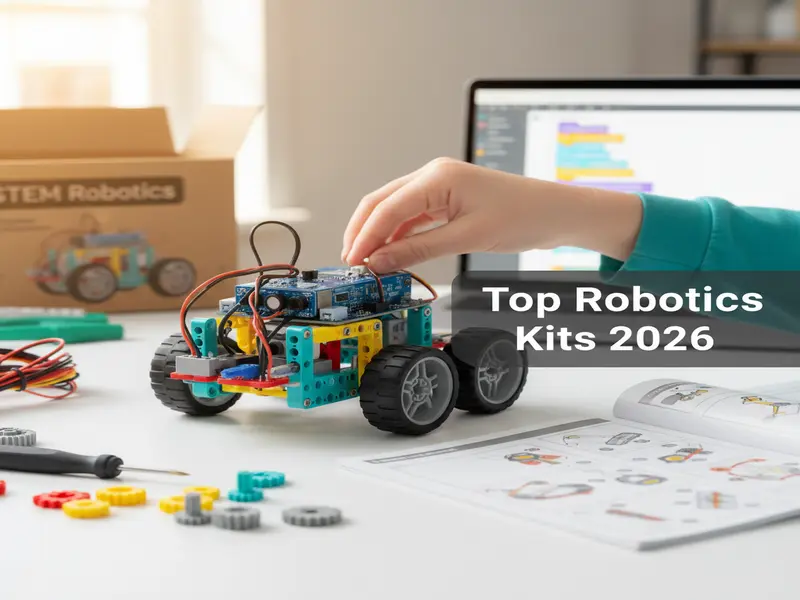
If you’re exploring the best stem robotics kits to introduce coding, electronics, and hands-on engineering concepts, you’re in the right place. These kits are used for teaching core STEM skills, building problem-solving confidence, and providing a tactile way for learners of different ages to experiment with sensors, motors, and simple programming.
Thank you for reading this post, don't forget to subscribe!Many buyers struggle with determining appropriate age range and skill level, dealing with vague instructions, ensuring software and hardware compatibility, and finding kits that are durable enough for repeated use. Others worry about whether a kit will stay engaging as skills improve or if replacement parts and expandability are available. Choosing the right stem robotics kit matters because the right match accelerates learning, reduces frustration, and gives better long-term value; the wrong choice can mean wasted time, money, and motivation.
This article is based on product features, performance, real user feedback, and value for money to help you make an informed decision. Read on to compare key features and practical considerations in the comparison table and product list that follow, so you can quickly find a kit that fits your learner’s needs and goals.
Best STEM Robotics Kits 2026: Must-Have Picks


Last update on 2025-12-20 / Affiliate links / Images from Amazon Product Advertising API
Read More:
- Best Suction Grab Bar for Shower 2026 — Top Picks
- Best Tidy Cats Litter Picks 2026 — Top Choices
- Best Soccer Ball for Juggling 2026 — Top Picks
- Best Shampoo with Argan Oil 2026 — Top Picks & Benefits
- Best Pulse Induction Metal Detector 2026 — Ultimate Picks
ELEGOO UNO R3 Smart Robot Car Kit V4 for Arduino Robotics for Kids Ages 8-12 12-16 STEM Science Kits Coding Gifts for 8 9 10 11 12 13 14 15 16 Year Old Boys Girls Teens Cool Engineering Building Toys Review
Introduction
The ELEGOO UNO R3 Smart Robot Car Kit V4 is an excellent educational tool designed to introduce kids and teens to the exciting world of robotics, programming, and electronics. Tailored for children aged 8 to 16, this STEM science kit allows young learners to build and code their own smart robot car, making it a valuable hands-on experience. Whether you’re a parent, teacher, or hobbyist looking for an engaging, cool engineering building toy, this kit offers a comprehensive learning platform that blends fun with education.
Key Features
- Complete package with 24 different modules including obstacle avoidance, line tracking, and infrared remote control.
- Compatible with Android and iOS devices for remote control via phone or tablet.
- Easy assembly thanks to pre-modified XH2.54 ports that minimize connection errors.
- Includes HD tutorials and all necessary programs and codes for smooth building and coding experience.
- Upgraded minimalist design, making it appealing and user-friendly for kids and teens.

Pros and Cons
- Pros: Engaging STEM learning experience; detailed, easy-to-follow instructions; versatile control options including phone app; high-quality parts and modules; suitable for a wide age range.
- Cons: Requires basic electronic knowledge or adult supervision for best results; some coding concepts might challenge absolute beginners; assembly can take time for younger users.
Performance & User Experience
The ELEGOO UNO R3 Smart Robot Car Kit performs well in both educational and hobbyist settings. Users report smooth assembly aided by clear tutorials and modular components that fit together intuitively. The smart car responds accurately to obstacle avoidance and line tracking modules, demonstrating practical robotics applications. Control via smartphone enhances interactivity and motivates kids to experiment with coding and customization. While younger children may need guidance, the kit encourages problem-solving and creativity, making learning enjoyable and rewarding.
Who Is This Product For?
This kit is ideal for kids aged 8 to 16 who have an interest in robotics, coding, and hands-on STEM activities. It’s perfect for parents and educators seeking an educational gift that combines learning with fun. Teens and beginners with some basic electronics background will appreciate the challenge and versatility. However, absolute novices should consider adult supervision to maximize the learning experience and overcome any initial hurdles.
Final Verdict
The ELEGOO UNO R3 Smart Robot Car Kit V4 stands out as a thoughtfully designed educational toy that sparks curiosity in robotics and programming among kids and teens. Its well-rounded package, including diverse modules and user-friendly tutorials, makes it a valuable tool for STEM learning. Despite requiring some prior knowledge or mentorship, it offers great potential for skill development and creative exploration. Overall, this robot car kit is a worthwhile investment for those looking to nurture a passion for technology and engineering.
Sillbird Robot Building Kit with Remote Control Christmas STEM Gifts for Boys Age 8-13, Technic Coding Robotic Toys for Kids Birthday, Buildable 5in1 Models with 488 Pieces Review
Introduction
The Sillbird Robot Building Kit is an engaging STEM toy designed specifically for children aged 8 to 13. Combining hands-on building with interactive remote control and coding features, it offers a perfect blend of education and entertainment. Ideal for holidays, birthdays, or just encouraging curiosity, this kit invites young minds to explore robotics through a variety of buildable models. It stands out as a versatile gift that not only entertains but also sparks creativity and critical thinking.
Key Features
- 5-in-1 Buildable Models: Create robots, dinosaurs, cars, tanks, and more with 488 pieces, each offering varying levels of building difficulty.
- Dual Control Modes: Operate your creations using a Bluetooth app or a traditional remote control for flexible and intuitive play.
- STEM Educational Focus: Encourages early programming skills, problem-solving, and hands-on learning in a fun, screen-free environment.
- Rechargeable Battery: Provides up to 40 minutes of continuous playtime on a single charge, eliminating the hassle of frequent battery replacements.
- Clear Instructions: Comes with detailed, colorful step-by-step guides to help kids build independently or enjoy quality family time.
- Adjustable Parts: Movable head, arms, and tail for more dynamic and creative posing of the assembled models.

Pros and Cons
- Pros: Encourages STEM learning and creativity; multiple build options for extended engagement; easy-to-follow instructions; two control methods for varied interaction; rechargeable and eco-friendly battery.
- Cons: Some younger kids might need adult assistance with complex builds; Bluetooth app requires a compatible device; assembly can be time-consuming for beginners.
Performance & User Experience
In practice, the Sillbird Robot Building Kit performs well as both an educational tool and a source of fun. Children report satisfaction in seeing their creations come to life and enjoy experimenting with programming commands via the app. The remote control option adds immediate playability without needing tech setup, perfect for younger users. While building the more complex models requires patience, the clear instructions and step progression keep frustration minimal. The battery life is sufficient for multiple play sessions, and recharging is straightforward, encouraging longer and repeated use.
Who Is This Product For?
This kit is ideal for children aged 8 to 13 who have an interest in robotics, coding, and hands-on STEM activities. It’s a great gift for parents looking to inspire learning through play, educators seeking engaging classroom tools, or anyone wanting to introduce kids to basic programming and mechanical design. Beginners and intermediate builders will both find suitable challenges, making it a versatile option for a wide range of young learners.
Final Verdict
Overall, the Sillbird Robot Building Kit offers a well-rounded combination of educational value and enjoyable play. Its diverse model options, dual control modes, and focus on STEM skills make it a thoughtful gift that grows with a child’s abilities. While it may require some initial guidance for younger users, the rewarding experience and creative possibilities outweigh minor challenges. For parents and educators aiming to encourage technical curiosity and problem-solving, this robot kit is a strong contender.
STEM Robotics Kits for Kids Age 8-12 8-10, Science Kits for Kids 8-12, STEM Toys for Boys Age 6 7 8 9 10 12 13 14 Girls Boys Birthday Gifts, Robot Building Crafts 6-8 Engineering Motor Set Review
Introduction
The STEM Robotics Kits for Kids Age 8-12 offer a fantastic hands-on learning experience designed to introduce children to basic engineering and robotics concepts. Featuring six distinct robot-building projects, this kit encourages creativity, problem-solving, and scientific curiosity in a fun and interactive way. Perfect for young learners looking to explore STEM subjects beyond traditional screen time, this set is an excellent choice for parents and educators seeking engaging educational toys.
Key Features
- Includes 6 separate STEM kits: bubble machine, doodling robot, balance robot, crawling robot, glider, and air rocket—each packaged individually for organized building.
- Encourages learning through play by combining electric motors and simple robotics concepts, sparking creativity and imagination.
- Designed for kids aged 8-12 with easy-to-follow illustrated instructions to guide children step-by-step.
- Promotes family bonding as parents can join in the building process, making it a collaborative educational activity.
- Comes in an attractive gift box, making it ideal for birthdays, holidays, or classroom projects.

Pros and Cons
- Pros: Variety of projects keeps children engaged; enhances fine motor skills and critical thinking; suitable for both boys and girls; fosters family interaction; well-organized packaging and clear instructions.
- Cons: Younger kids (under 8) may need adult assistance; some parts may be small and require supervision; limited to beginner-level robotics concepts.
Performance & User Experience
In real-world usage, the STEM Robotics Kits deliver an enjoyable and educational experience. Children quickly grasp the basics of motorized movement and simple mechanics while building different robots. The instructions are clear and visually guided, which helps reduce frustration and enhances learning retention. Parents report that this kit effectively holds kids’ attention and serves as a productive alternative to screen time. Although some assembly requires patience, the sense of accomplishment at completing each project makes it worthwhile.
Who Is This Product For?
This STEM robotics kit is ideal for children aged 8 to 12 who show an interest in science, technology, engineering, and math. It suits parents and educators looking for engaging, educational toys that support hands-on STEM learning. Additionally, it’s a great gift for birthdays or holidays, especially for kids who enjoy building crafts and experimenting with simple engineering concepts.
Final Verdict
The STEM Robotics Kits for Kids Age 8-12 stand out as a valuable educational tool that combines fun and learning effectively. With six diverse projects to build and explore, it nurtures creativity and problem-solving skills while strengthening family connections. While younger children may need guidance, the clear instructions and quality components ensure a smooth building experience. Overall, this kit is a worthy investment for anyone wanting to inspire a child’s passion for STEM in an enjoyable, hands-on way.
Read More:
- Simpson 4000 PSI Hot Water Pressure Washer Review 2026
- DeLonghi La Specialista Arte Review 2026 Renewed Gem
- Best Freestanding Refrigerators 2025 — Top Picks & Deals
- ZONSEN B200 Wood Chipper Review 2026 Worth The Power?
- Best Air Fryers for Fried Chicken 2025 — Top Picks
Buying Guide: How to Choose the best stem robotics kits
Types and categories: match kit type to your goals
STEM robotics kits come in several categories—beginner-friendly snap-together kits, modular building systems, programmable microcontroller kits, and competition-style platforms. Understanding these types helps you decide whether you need a kit for classroom lessons, solo learning, hobby projects, or competitive robotics.
When learning how to choose best stem robotics kits, consider the typical user and outcome: young learners often benefit from guided, low-code kits, while older students and makers may prefer modular or programmable systems that support custom sensors and code. Think about the learning path you want the kit to support over time.
Key performance factors: power, speed, precision and expandability
Performance matters differently depending on use. Power and torque affect what your robot can move or lift; motor speed and control precision determine how accurately it navigates tasks; and available inputs/outputs or communication options determine expandability and real-world interfacing.
When evaluating what to look for in best stem robotics kits, focus on real-world scenarios such as carrying payloads, following lines, or executing timed challenges. Choose a kit whose motors, controllers, and sensors align with the tasks you expect to perform rather than raw specifications alone.
Build quality, materials, and long-term durability
Build quality influences how long a kit will remain useful. Durable materials, well-fitted connectors, and robust gearboxes reduce breakage during repeated classroom use or intense hobby projects. Pay attention to the types of plastics, metal components, and how electronics are enclosed.
Consider typical usage patterns—heavy classroom rotation, outdoor trials, or frequent disassembly—and choose a kit whose construction matches that wear level. Better build quality often reduces downtime and replacement parts over the kit’s lifetime.
Ease of use and setup for typical users
Ease of use affects how quickly users progress from unboxing to meaningful experiments. Clear assembly instructions, visual guides, plug-and-play electronics, and beginner-friendly programming environments lower the barrier to entry and improve learning outcomes.
For buyers asking how to choose best stem robotics kits for schools or families, prioritize kits with straightforward setup, tiered project complexity, and learning resources so novices gain confidence while advanced users still have room to grow.
Maintenance requirements and upkeep effort
Maintenance needs vary by kit. Some systems require occasional firmware updates and battery care; others need periodic tightening of fasteners or replacement of wearable parts like gears, belts, or wheels. Understand what routine tasks you’ll perform to keep the kit operational.
Realistic buyer concerns include availability of spare parts and the time needed for upkeep between sessions. Selecting a kit with accessible replacement components and simple maintenance routines reduces disruption and keeps projects on track.
Noise level, comfort, and usability considerations
Noise and usability matter in shared spaces. Loud motors or grinding gears can distract a classroom or workshop, while ergonomics of controllers and the physical size of parts affect handling for younger users or makers with limited workspace.
When comparing kits, consider typical environments and user comfort: quieter motor options, smoother gear trains, and compact designs improve the usability of a kit for prolonged learning sessions and group activities.
Safety features and user protection
Safety is critical, especially for kits used by children. Look for enclosed moving parts, overcurrent protection for motors, safe battery chemistry, and clear safety instructions. Kits that minimize pinch points and include guidelines for supervised use are preferable.
Explain safety expectations to users and choose a kit whose features match the user’s skill level and supervision context. A cautious approach reduces the risk of accidents while encouraging hands-on exploration.
Energy efficiency and operating costs
Energy efficiency affects how long batteries last and how often you need to recharge or replace power sources. Kits with low-power controllers, efficient motors, or support for rechargeable batteries lower ongoing operating costs and increase session time.
Consider the typical duration of activities and the availability of charging infrastructure. For frequent use, prioritize kits that balance performance with reasonable power consumption to reduce interruptions and long-term expenses.
Warranty, customer support, and reliability
Warranty terms, the availability of replacement parts, and responsive customer support all influence long-term satisfaction. A clear warranty and accessible technical help make it easier to resolve defects, learn through troubleshooting, and extend the useful life of a kit.
As part of this best stem robotics kits buying guide, evaluate the manufacturer’s support channels and documentation quality. Reliable support and a practical warranty reduce risk and give buyers confidence that issues can be addressed without undue hassle.
FAQs
How do I choose the right STEM robotics kit for my child?
Start by matching the kit to the learner’s age, skill level, and interests—consider coding languages, hardware complexity, and durability for hands-on use. Look for clear learning pathways and available support resources like tutorials or community forums. Practical constraints such as required tools and platform compatibility matter too. Comparing these factors helps narrow down which of the best stem robotics kits fit your educational goals.
What features should I look for in a STEM robotics kit?
Prioritize modular components, intuitive software, and scalable complexity so projects grow with the learner. Check for cross-platform compatibility, good documentation, and real-world project examples that teach problem solving. Safety and robust construction are important for younger users. Evaluating these features will help you identify the best stem robotics kits that balance learning outcomes with ease of use.
Are STEM robotics kits suitable for beginners without coding experience?
Yes—many kits are designed for beginners, offering block-based programming, guided tutorials, and step-by-step builds that introduce coding concepts gradually. Look for kits that explicitly state beginner-friendly resources and have a low setup barrier. While some learning curve is normal, choosing one of the best stem robotics kits with clear onboarding reduces frustration and supports steady progress.
How long will a STEM robotics kit remain engaging?
Engagement depends on the kit’s scalability and the learner’s goals. Kits that offer multiple projects, expandable components, or software updates can remain engaging across months or years as skills develop. Educational content and community challenges also extend usefulness. Assess whether a kit’s learning path and expansion options align with expected progression when comparing the best stem robotics kits for sustained engagement.
Can STEM robotics kits support classroom or group learning?
Many kits are suitable for classroom use when they include multiple build options, clear lesson plans, and classroom management materials. Consider kits with collaborative projects and straightforward setup to minimize teacher prep time. Compatibility with common devices and available educator resources will influence practicality. Choosing the best stem robotics kits for group settings means balancing curriculum alignment, scalability, and ease of supervision.
Conclusion
In this article we reviewed what matters when evaluating stem robotics kits: matching kit complexity to age and skill, looking for clear learning pathways and supportive documentation, preferring modular hardware and scalable software, and considering classroom or group usability. We discussed beginner accessibility, safety and durability, and how project variety affects long-term engagement. Use the buying guide and comparison sections to weigh those factors against your learner’s goals, time, and environment. There is no single best option for everyone; the right kit depends on your priorities, whether introductory coding, hands-on engineering, or curriculum alignment. With the information provided you can compare trade-offs objectively and choose a kit that fits your needs, helping learners progress with confidence and steady improvement. Consider learner interest and available time when deciding.