

If you’re shopping for the best belt drive pressure washer, you’re probably looking for durable, high-output cleaning power for big jobs. A belt drive pressure washer uses a belt-and-pulley system to transfer power from the engine to the pump, making it better suited to heavy-duty tasks like cleaning driveways, siding, decks, farm equipment, and commercial surfaces where sustained performance matters.
Thank you for reading this post, don't forget to subscribe!Common buyer pain points include uncertainty about long-term reliability, maintenance complexity, ease of belt adjustments, noise and vibration, fuel and fluid access, and whether the machine delivers consistent pressure without frequent repairs. Choosing the right belt drive unit matters because the correct balance of build quality, pump design, and serviceability reduces downtime, lowers lifetime costs, and makes tough cleaning jobs faster and safer.
This article looks past marketing claims and focuses on practical factors—product features, real-world performance, verified user feedback, and overall value for money—to help you make an informed choice. Read on for a concise comparison table and detailed product list that highlight the strengths and trade-offs so you can pick the best option for your needs.
Best Belt Drive Pressure Washer Reviews 2026


Last update on 2025-12-20 / Affiliate links / Images from Amazon Product Advertising API
Read More:
- Best Automatic Jar Opener 2026 – Top Picks & Reviews
- Best At Home Pottery Wheel 2026: Top Picks & Tips
- Best Ant Killer Pet Safe Picks 2026 — Protect Pets
- Best Automatic Jar Opener 2026 – Top Picks & Reviews
- Best At Home Pottery Wheel 2026: Top Picks & Tips
Simpson Cleaning 4200 PSI Gas Pressure Washer, 4.0 GPM Power Washer for Commercial Use, Honda Engine, 50-Foot Hose, Aluminum Water Blaster, 49-State (ALWB60828) Review
Introduction
The Simpson Cleaning 4200 PSI Gas Pressure Washer is a robust solution designed for commercial and industrial cleaning tasks. Equipped with a powerful Honda GX390 engine, this pressure washer promises reliability and high performance, making it an excellent choice for contractors and professionals who demand efficiency in deck cleaning, wood restoration, graffiti removal, and more. Its durable aluminum frame and extensive accessories make it a versatile and practical tool worth considering for tough cleaning jobs.
Key Features
- Powerful Honda GX390 Engine: Ensures easy starting and long-lasting performance for demanding applications.
- 4200 PSI at 4.0 GPM: Provides ample pressure and flow rate for heavy-duty cleaning tasks.
- Durable CAT Triplex Pump: Maintenance-free design with thermal relief to prevent overheating.
- 50-Foot High-Pressure Hose: Kink- and abrasion-resistant for flexibility and longevity on the job site.
- Five Quick-Connect Nozzles: Versatile cleaning options including 0°, 15°, 25°, 40°, and soap application.
- Lightweight Aluminum Frame: Crafted from aircraft-grade aluminum for corrosion resistance and easier maneuverability.
- 13-inch Premium Pneumatic Tires: Smooth operation across uneven terrain and various surfaces.

Pros and Cons
- Pros:
- High-pressure output suitable for tough cleaning jobs.
- Reliable Honda engine with commercial-grade durability.
- Lightweight yet sturdy aluminum frame for portability.
- Comes with essential accessories for versatile use.
- Long hose and large tires improve ease of use on different terrains.
- Cons:
- Not EPA compliant in California, limiting usage in that state.
- Relatively large and heavy compared to electric washers, requiring some physical effort to transport.
- Fuel and oil need regular monitoring for continuous operation.
Performance & User Experience
In real-world scenarios, the Simpson Cleaning 4200 PSI pressure washer performs consistently and powerfully. Users report smooth starts and stable operation thanks to the Honda GX390 engine and belt drive system which reduces vibration and heat buildup. Its strong water flow and pressure effectively tackle dirt, grime, and paint preparation tasks with ease. The long 50-foot hose and ergonomic gun handle enhance comfort and reach during extended use, while the durable aluminum frame withstands tough job site conditions without corrosion. Although it requires fuel and occasional maintenance, its overall reliability and power make it a favorite among professionals.
Who Is This Product For?
This pressure washer is ideal for commercial contractors, professional cleaners, and property maintenance teams who need a powerful, durable machine for frequent heavy-duty cleaning. It suits those specializing in tasks like deck restoration, graffiti removal, fleet maintenance, and construction cleanup. Its robust build and performance also benefit users who require a portable yet reliable power washer for demanding environments.
Final Verdict
The Simpson Cleaning 4200 PSI Gas Pressure Washer is a dependable and well-built machine tailored for commercial use. Its combination of Honda engine reliability, strong pressure output, and durable yet lightweight aluminum construction offers a balanced mix of power and portability. While it’s best suited for professionals accustomed to gas-powered equipment, it delivers excellent value with versatile accessories and proven performance. If you’re looking for a heavy-duty pressure washer that can handle rigorous cleaning tasks efficiently, this model is definitely worth considering.
Simpson Cleaning 4400 PSI Gas Pressure Washer, 4.0 GPM Power Washer for Commercial Use, CRX Engine, 50-Foot Steel-Braided Hose, Water Blaster, 49-State (WB60824) Review
Introduction
The Simpson Cleaning 4400 PSI Gas Pressure Washer is a robust and reliable choice for professionals seeking powerful cleaning performance. Designed with a commercial-grade CRX 420 engine and an industrial triplex pump, this pressure washer delivers impressive pressure and flow for tough cleaning jobs. Whether you’re tackling deck restoration, fleet maintenance, or heavy-duty property cleaning, this model offers the durability and efficiency needed for demanding tasks.
Key Features
- Powerful Engine: Equipped with a SIMPSON CRX 420 commercial engine producing 4400 PSI at 4.0 GPM for efficient cleaning power.
- Durable Pump: Features a maintenance-free AAA industrial triplex plunger pump with thermal relief to prevent overheating during extended use.
- Quality Accessories: Includes a 50-foot steel-braided hose resistant to kinks and abrasions, plus five quick-connect nozzles (0°, 15°, 25°, 40°, Soap) for versatile applications.
- Sturdy Build: Aircraft-grade aluminum frame and 13-inch premium pneumatic tires ensure portability and corrosion resistance on various terrains.
- Enhanced Efficiency: Dual-belt system separates engine and pump, reducing heat buildup and prolonging equipment lifespan.

Pros and Cons
- Pros:
- Exceptional cleaning power with high PSI and flow rate.
- Durable construction suited for commercial use.
- Includes versatile nozzles and a long, abrasion-resistant hose.
- Good portability with large pneumatic tires and lightweight aluminum frame.
- Thermal relief valve prevents pump overheating.
- Cons:
- Relatively heavy compared to smaller residential models.
- Requires regular maintenance typical of gas-powered equipment.
- Fuel tank needs monitoring during extended use (1.6 gallons capacity).
Performance & User Experience
In practical use, the Simpson Water Blaster excels at delivering consistent and powerful water pressure, making it ideal for professionals handling tough grime and debris. The CRX engine starts easily and runs smoothly with minimal vibration, while the industrial triplex pump ensures durability under continuous operation. Users appreciate the long steel-braided hose, which adds flexibility without sacrificing strength. Maneuvering the unit is straightforward, thanks to the large pneumatic tires and lightweight frame, even on uneven outdoor surfaces. The multiple nozzle options provide versatility, enabling precise control for different cleaning tasks.
Who Is This Product For?
This pressure washer is tailored for contractors, professional cleaners, and commercial users who require a reliable, high-performance machine for heavy-duty cleaning projects. It is especially beneficial for individuals involved in deck restoration, graffiti removal, fleet maintenance, and industrial site cleaning. Homeowners with large properties or demanding outdoor cleaning needs may also find its power and durability advantageous.
Final Verdict
The Simpson Cleaning 4400 PSI Gas Pressure Washer stands out as a professional-grade tool that combines power, durability, and ease of use. Its commercial engine and industrial pump deliver excellent performance for demanding cleaning tasks, while thoughtful features like a corrosion-resistant frame and thermal relief valve extend its lifespan. Although it’s a bit heavier than residential models, its quality build and versatile accessories justify the investment for serious users. For those looking for a dependable pressure washer that can handle rigorous commercial applications, this model is a solid choice.
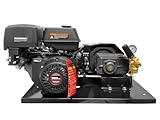
Canpump Belt Drive High Flow Pressure Washer 3600 PSI, 5 GPM – Triplex Power Washer Pump, 13 HP Loncin Engine – Electric Start, Commercial Grade, Fully Serviceable w/External Unloader Review
Introduction
The Canpump Belt Drive High Flow Pressure Washer offers a powerful and reliable solution for heavy-duty cleaning tasks. Designed with commercial and industrial users in mind, it combines a robust 13 HP Loncin engine with a durable triplex pump capable of delivering 3600 PSI at 5 GPM. This makes it an excellent choice for those needing consistent performance across demanding environments such as construction sites, agricultural operations, and fleet maintenance.

Key Features
- High Power Output: Delivers 3600 PSI at 5 GPM, perfect for tough cleaning jobs.
- Durable Triplex Pump: Belt-driven at half speed to minimize wear and extend pump life.
- Reliable 13 HP Loncin Engine: Featuring a 389cc 4-stroke OHV engine with electric start for hassle-free ignition (12V battery required, not included).
- Fully Serviceable Design: External unloader valve is detachable, allowing easy maintenance without disassembling the pump.
- Accessory Compatibility: Works seamlessly with Canpump’s professional range of spray guns, turbo nozzles, and foam kits to customize your setup.
- User Support: Access to toll-free phone, email, and live chat support ensures assistance when needed.
Pros and Cons
- Pros:
- Powerful pressure and flow rate suitable for commercial-grade cleaning.
- Electric start simplifies operation compared to pull-start models.
- Belt drive system reduces pump wear and prolongs service intervals.
- Easy maintenance with external unloader valve.
- Compatible with a wide variety of professional accessories.
- Cons:
- Requires a 12V battery for electric start (battery not included).
- Ships by freight, which may involve additional handling considerations.
- Relatively heavy and bulky, less ideal for casual or light use.
Performance & User Experience
In real-world applications, the Canpump pressure washer performs reliably under continuous heavy workloads. The 13 HP Loncin engine provides strong torque, ensuring stable power delivery even in demanding environments. Users appreciate the electric start feature, which eliminates the effort involved in rope-pull starting. The belt-driven pump effectively reduces mechanical stress, resulting in quieter operation and longer lifespan. Maintenance is straightforward thanks to the external unloader valve, making it easier to service without downtime. Whether cleaning equipment in construction zones or washing agricultural machinery, this model offers consistent, high-quality results.
Who Is This Product For?
This pressure washer is ideal for professionals and businesses requiring a durable, high-capacity cleaning tool. It suits contractors, farmers, municipal workers, and fleet managers who need a machine built to handle tough grime and frequent use. Due to its size and power, it’s less suited for casual homeowners or light residential cleaning but excels in commercial and industrial settings.
Final Verdict
The Canpump Belt Drive High Flow Pressure Washer stands out as a robust and dependable machine designed for rigorous commercial applications. Its combination of a 13 HP Loncin engine, heavy-duty triplex pump, and thoughtful features like electric start and easy maintenance make it a smart investment for professionals. While it requires a 12V battery to operate and involves freight shipping logistics, these minor inconveniences are outweighed by its performance and longevity. Overall, this pressure washer is a solid choice for anyone needing reliable, high-power cleaning equipment.
Read More:
- Best Fire Sense Patio Heaters 2025: Top Picks & Tips
- Toro 60V Leaf Blower Review 2026 Is It Worth Buying
- Brushless 12 Inch Electric Chainsaw Review 2026
- SENIX 21 Inch Gas Push Lawn Mower Review 2026
- 30 inch electric cooktop review 2026 powerful 5 burner
Buying Guide: How to Choose the best belt drive pressure washer
Types and categories: finding the right style for your needs
Belt drive pressure washers come in a few common configurations, from compact residential units to heavy-duty commercial frames. Consider whether you need a portable model for occasional driveway cleaning or a truck-mounted style for continuous, professional use; each class is built around different durability and service demands.
Think about typical tasks you will do—light home cleaning, deck restoration, or regular job-site use—and match the category to that pattern. Understanding these types helps you narrow options when deciding how to choose best belt drive pressure washer for your situation.
Key performance factors: power, flow, and practical output
Two primary numbers to compare are pressure (PSI) and flow rate (GPM); together they determine cleaning power and how quickly surfaces are cleaned. Higher PSI removes stubborn grime while higher GPM rinses faster; select a balance that fits the materials and soil you expect to tackle.
Also consider engine size and pump rating because they affect sustained performance and how the unit behaves under load. For regular heavy use choose components rated for longer duty cycles; for occasional home chores a lower-powered, easier-to-handle model may be sufficient.
Build quality, materials, and long-term durability
Look at frame construction, pump materials, and belt-drive components to assess longevity; steel frames and brass or ceramic pump parts typically hold up better under frequent use than cheaper materials. Corrosion-resistant finishes and quality hardware reduce the chance of early wear, especially if the unit sees outdoor storage or salty environments.
Check for serviceable design, such as accessible bearings and replaceable belts, which make long-term repairs simpler and less costly. Real-world durability often comes from both material choices and how easy it is to maintain and replace wear parts.
Ease of use and setup for typical buyers
Consider how simple assembly and everyday operation are: quick-connect fittings, clear controls, and intuitive nozzle selection save time and reduce frustration for non-expert users. If you expect to move the machine often, features like good wheels, balanced weight distribution, and ergonomic handles matter for comfort and safety.
Think about storage and transport needs too—compact designs that break down or have built-in hose reels can make life easier for homeowners, while modular units may suit professionals who need to adapt equipment to different jobs.
Maintenance requirements and upkeep effort
Every belt drive pressure washer needs periodic tasks like belt inspection, pump oil changes, and filter cleaning; understand the recommended service intervals and whether routine checks require tools or professional help. Buyers who prefer low upkeep should prioritize models with clear maintenance access and straightforward procedures.
Factor in the availability of consumables and replacement parts such as belts, seals, and nozzles in your area. A machine that’s easy to service locally will usually have lower downtime and ownership hassle over several years.
Noise level, comfort, and usability considerations
Noise can be significant, especially with larger engines; if you’ll use the washer in residential areas or enclosed spaces, look for units rated for lower decibel output or features that reduce vibration and sound. Comfort features like insulated handles, anti-vibration mounts, and user-friendly gun controls make longer jobs less tiring.
Consider how prolonged use affects operator fatigue and take breaks, mounting options, or accessories that improve ergonomics into account when choosing. Usability often determines whether the unit gets used correctly and safely.
Safety features and user protection
Prioritize models with clear safety measures such as thermal relief valves, unloader valves that prevent dangerous pressure build-up, and secure hose connections to reduce the chance of accidental disconnection. Trigger locks and chemical injection safeguards protect both the operator and the equipment during use and transport.
Understand the safe operating practices for high-pressure equipment and check that controls are easy to reach and labeled to reduce user error. Good safety design reduces the likelihood of injury and equipment damage in everyday scenarios.
Energy efficiency and operating costs
Fuel consumption for gas engines or electrical efficiency for electric models affects ongoing costs; evaluate expected runtime and fuel or power draw relative to the cleaning output you get. More efficient machines can lower operating costs over time, especially for frequent, long-duration use.
Also consider consumables like detergents and replacement parts as part of total ownership cost. Choosing a model with efficient water and fuel use typically reduces both environmental impact and long-term expense.
Warranty, customer support, and reliability
Review the warranty scope and what it covers for the pump, engine, and belt-drive system; clear warranty terms and straightforward claims processes are useful if repairs are needed. Reliable customer support and accessible service centers help resolve issues faster and keep downtime to a minimum.
Look for machines with documented serviceability and available replacement parts, since practical reliability is often determined by how easily a unit can be repaired and supported locally. Consider expected usage patterns and choose the level of warranty and support that matches how critical uptime is for you.
FAQs
How do I choose the right belt drive pressure washer for my needs?
When choosing the best belt drive pressure washer, match the machine’s intended workload with its power and duty cycle, consider portability and storage, and weigh maintenance and serviceability. Think about typical tasks, frequency of use, noise tolerance, and accessory needs. Comparing these factors helps narrow options to models that fit your working conditions and long-term maintenance capacity.
What maintenance does a belt drive pressure washer require?
Maintaining a best belt drive pressure washer typically involves inspecting and adjusting belt tension, checking belts for wear, following pump oil and filter schedules, flushing detergent lines after use, and winterizing if needed. Regular inspections of hoses and connections and storing the unit dry reduce breakdowns. Consistent maintenance extends usable life and improves reliability without guaranteeing specific lifespans.
Are belt drive pressure washers better for heavy use than direct drive models?
Many buyers find a best belt drive pressure washer better suited for frequent or heavy-duty tasks because belt drives often run at lower RPMs and can be easier to service. That said, direct drive units can be adequate for occasional residential use. The choice depends on how often you’ll run the machine, service preferences, noise tolerance, and whether easier repairs are important.
What safety considerations should I know before using a belt drive pressure washer?
Before operating a best belt drive pressure washer, follow basic safety: wear eye and hearing protection, secure loose clothing, and place the unit on stable ground. Inspect hoses, fittings, and belts for damage before startup. Be mindful of pressure settings for different surfaces and never direct the spray at people, animals, or electrical equipment to avoid injury and equipment damage.
How long can I expect a belt drive pressure washer to last with regular maintenance?
Lifespan varies with usage, maintenance, and build quality. With regular care—timely belt and pump maintenance, proper storage, and attention to operating hours—a best belt drive pressure washer can remain reliable for many years in residential or light commercial roles. Heavy commercial use increases wear and shortens service intervals, so plan for periodic parts replacement and inspections rather than a fixed lifespan.
Conclusion
In this article we compared the main considerations when evaluating belt drive pressure washers, including build durability, intended workload, ease of maintenance, portability, and accessory compatibility. We explained how power output, flow rate and duty cycle influence suitability for light, frequent, or commercial tasks, and outlined realistic maintenance and safety concerns buyers commonly face. When choosing the right best belt drive pressure washer, match machine characteristics to your typical jobs, storage and service capacity, and noise or mobility preferences. Use the buying guide and comparison sections to weigh trade-offs side by side and prioritize what matters most for your circumstances. There is no single best option for everyone; the ideal choice balances performance, longevity, and maintainability for your use pattern. With clear priorities and the information provided, you can make a confident, well-informed selection.