

If you’re searching for the best ergonomic split keyboard, you’ve likely spent enough time hunched over a standard keyboard to feel the strain. These keyboards are designed with a split layout that allows your hands to rest in a more natural, shoulder-width position, making them ideal for anyone who types for hours—whether you’re a programmer, writer, gamer, or remote worker aiming to reduce wrist fatigue and promote better posture.
Thank you for reading this post, don't forget to subscribe!Many people turn to them after dealing with common issues like repetitive strain injuries (RSI), nagging wrist pain, finger numbness, or general discomfort from traditional straight keyboards that force awkward angles. The good news is that switching to an ergonomic split model can make a real difference in your daily comfort and long-term hand health, helping you type more efficiently without the distractions of aches and tension.
Choosing the right one matters because not all split keyboards deliver the same level of adjustability, build quality, or typing feel—factors that directly impact your productivity and satisfaction. That’s why this guide draws from in-depth analysis of product features, real-world performance, genuine user feedback, and overall value for money to help you make an informed decision.
Keep reading for a detailed comparison that highlights the standout options and what sets them apart, so you can find the perfect fit for your setup.
Best Ergonomic Split Keyboards 2026: Top Picks


Last update on 2025-12-21 / Affiliate links / Images from Amazon Product Advertising API
Read More:
- Best Fertilizer for Pot Plants 2026: Top Picks
- Best Fly Trap Bait 2026: Top Proven Picks
- Best Electric Tea Kettle Made in USA 2026
- Best DVR Recorders for Antenna TV in 2026
- Best Drip Irrigation Timers 2026: Top Picks
Logitech ERGO K860 Wireless Ergonomic Keyboard – Split Keyboard, Wrist Rest, Natural Typing, Stain-Resistant Fabric, Bluetooth and USB Connectivity, Compatible with Windows/Mac, Black Review
Introduction
If you’re spending long hours typing and dealing with wrist discomfort, the Logitech ERGO K860 Wireless Ergonomic Keyboard offers a thoughtful solution. This split-design keyboard aims to promote natural posture and reduce strain, making it a strong contender for anyone prioritizing comfort without sacrificing functionality.

Key Features
- Ergonomic Split Design: Curved keyframe and sloping layout minimize wrist bending by 25% and provide 54% more support.
- Memory Foam Wrist Rest: Pillowed for comfort during extended sessions.
- Perfect Stroke Keys: Scooped for precise, fluid typing with quiet operation.
- Adjustable Tilt: Legs offer 0, -4, or -7 degrees for seated or standing use.
- Versatile Connectivity: Bluetooth or USB receiver, works with Windows and Mac.
- Sustainable Build: 71% post-consumer recycled plastic and FSC-certified packaging.
Pros and Cons
- Pros: Exceptional wrist support, natural typing feel, long battery life, easy multi-device pairing.
- Cons: Split layout may require adjustment period, larger footprint on desks, premium price point.
Performance & User Experience
In daily use, the ERGO K860 shines for prolonged typing tasks like writing reports or coding. The wrist rest keeps hands aligned, noticeably easing forearm tension after hours. Keys feel responsive and quiet, though the split design takes a week to master for touch typists. Connectivity is reliable, switching seamlessly between devices, and the two-year battery life means less hassle.
Who Is This Product For?
This keyboard suits office workers, programmers, writers, or remote professionals prone to repetitive strain. It’s ideal for those with larger desks who value ergonomics over compact size and are okay with a short adaptation phase.
Final Verdict
The Logitech ERGO K860 delivers on its ergonomic promises, offering tangible comfort gains for heavy typists. While not perfect for minimalists, its thoughtful design and build quality make it a worthwhile investment for better long-term posture and productivity.
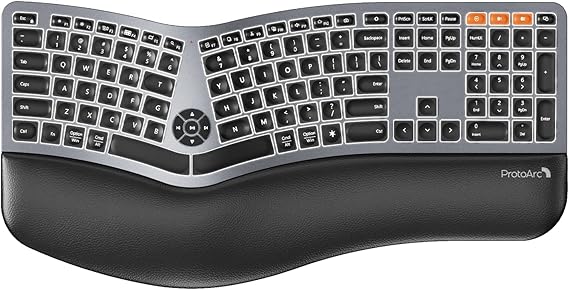
Backlit Bluetooth Ergonomic Keyboard, ProtoArc EK01 Plus Full Size Wireless Split Keyboard with Dual Bluetooth and USB, Cushioned Wrist Rest, Rechargeable for Windows/Mac/Android, Grey Black Review
Introduction
If you’re spending long hours at a desk, an ergonomic keyboard like the ProtoArc EK01 Plus could make a noticeable difference in comfort. This full-size wireless model combines a split design with backlighting and multi-device connectivity, aiming to support healthier typing habits without sacrificing functionality. It’s a solid option for those seeking relief from wrist strain in everyday computing.
Key Features
- Ergonomic Split Layout: Curved keyframe and scooped keys promote natural hand positioning to minimize forearm and wrist fatigue.
- Adjustable White LED Backlight: Three brightness levels with auto-off after inactivity to save power and suit various lighting conditions.
- Multi-Device Pairing: Connects via Bluetooth or 2.4G USB to up to three devices, with easy switching for Windows, Mac, or Android setups.
- Rechargeable Battery: 2000mAh capacity via USB-C, offering long use, especially without lights.
- Comfort Enhancements: Padded wrist rest and four tilt feet for customizable angles.
Pros and Cons
- Pros: Excellent wrist support reduces discomfort during extended sessions; seamless device switching boosts productivity; solid battery life for wireless use.
- Cons: Backlight turns off quickly, which may interrupt low-light work; no wired option limits versatility; requires specific low-power charging to avoid issues.
Performance & User Experience
In daily use, the ProtoArc EK01 Plus delivers responsive keys with a comfortable travel distance, ideal for typing reports or coding. The split design encourages better posture, and the wrist rest feels plush without being too soft. Multi-device pairing works reliably across a laptop and tablet, though reactivation after deep sleep takes a moment. Backlighting helps in dim environments but demands reactivation, which some find fiddly. Overall, it holds up well for office or home setups.
Who Is This Product For?
This keyboard suits office workers, remote professionals, or gamers prone to RSI, especially those juggling multiple devices. It’s great for users prioritizing ergonomics over compact portability, but less ideal for travelers needing wired reliability.
Final Verdict
The ProtoArc EK01 Plus stands out for its thoughtful ergonomic elements and practical wireless features, making it a worthwhile choice for comfort-focused typists. While minor quirks like backlight management exist, the benefits in strain reduction and versatility make it reliable for prolonged use. Consider it if ergonomics top your list.
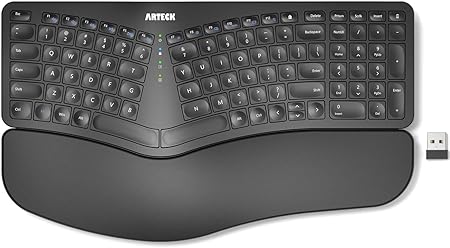
Arteck Split Ergonomic Keyboard with Cushioned Wrist and Palm Rest, 2.4G USB Wireless Comfortable Natural Ergonomic Split Keyboard, for Windows Computer Desktop Laptop Review
Introduction
If you’re spending long hours at a computer, wrist strain can become a real issue. The Arteck Split Ergonomic Keyboard aims to address this with its unique design that promotes a more natural typing posture. It’s a wireless option tailored for Windows users, combining comfort features like a cushioned rest with reliable connectivity, making it a solid choice for those seeking ergonomic relief without complexity.
Key Features
- Split Layout: The divided design allows wrists and forearms to stay in a neutral position, reducing tension during extended use.
- Cushioned Wrist Rest: Soft padding supports your wrists and palms, enhancing comfort over long sessions.
- Wireless 2.4G Connection: Plug-and-play via a nano USB receiver for lag-free typing.
- Long-Lasting Battery: Rechargeable with up to 6 months of life on a single charge (based on moderate daily use).
- Easy Setup and Warranty: Includes USB-C cable and a 24-month warranty for peace of mind.
Pros and Cons
- Pros: Excellent wrist support, stable wireless performance, impressive battery life, straightforward setup.
- Cons: Adjustment period needed for the split design, primarily optimized for Windows (limited Mac compatibility), no backlighting.
Performance & User Experience
In daily use, this keyboard shines for reducing fatigue during prolonged typing. The split halves encourage shoulder-width positioning, and the padded rest prevents pressure points. Connectivity is reliable up to 10 meters, with responsive keys suitable for both work and casual browsing. Battery holds up well, requiring infrequent charges, though initial adaptation to the layout takes a week or so for touch typists.
Who Is This Product For?
This keyboard suits office professionals, writers, or anyone prone to repetitive strain injury (RSI) who types extensively on Windows PCs. It’s ideal for desktop setups where space allows for its full-size layout, but less so for gamers needing speed or Mac users seeking broad compatibility.
Final Verdict
The Arteck Split Ergonomic Keyboard delivers on comfort and practicality for Windows users battling wrist discomfort. While it requires some getting used to, its thoughtful design and durability make it a worthwhile investment for better long-term typing health. Consider it if ergonomics top your list.
Read More:
- Makita XCU03PT Cordless Chainsaw Review 2026 Guide
- Best Portable Air Conditioners for Cars 2025
- Best Large-Screen OLED TVs 2026: Top Picks
- Best Smart Refrigerators 2025: Top Picks & Reviews
- Best Washers Game Set Picks 2025 — Ultimate Backyard Fun
Buying Guide: How to Choose the best ergonomic split keyboard
Types of Ergonomic Split Keyboards
Ergonomic split keyboards come in various designs to suit different hand positions and workflows. Some feature a fixed split with halves that angle inward, promoting natural wrist alignment, while others offer fully adjustable halves that can be separated and tented for customized ergonomics. Columnar layouts curve keys to match finger movements, differing from traditional row-based staggered designs that may feel more familiar but less adaptive.
Understanding these categories helps you match the keyboard to your desk setup and typing habits. For instance, portable users might prefer compact, transportable splits, whereas stationary setups benefit from larger, more adjustable models. Consider how much separation and tilt you need to reduce strain during long sessions.
This variety ensures there’s an option for most users, but testing the feel in person or via return policies can confirm the best fit for your posture.
Key Performance Factors
When evaluating performance, focus on switch types and actuation force, which affect typing speed and feedback. Mechanical switches often provide tactile or clicky responses for precise input, while low-profile options prioritize slimness and quieter operation. Adjustability in key spacing and thumb clusters enhances comfort for varied hand sizes.
Response time and anti-ghosting capabilities matter for multitasking or gaming, ensuring multiple keys register accurately. Programmable layers allow remapping for efficiency, tailoring the board to software-specific needs without physical changes.
These elements directly impact daily productivity, so prioritize based on whether you type extensively or need versatility across tasks.
Build Quality and Materials
Sturdy construction using aluminum or high-grade plastic frames resists flexing under heavy use, maintaining stability during extended typing. PBT or thick ABS keycaps withstand wear better than thinner alternatives, preserving legends and texture over time.
Quality soldering and PCB design prevent switch failures, contributing to longevity. Look for reinforced tenting mechanisms that hold positions securely without wobbling.
Investing in durable materials pays off by minimizing replacements, especially for those typing professionally for hours daily.
Ease of Use and Setup
Most split keyboards connect via USB or Bluetooth with minimal configuration, often plug-and-play for wired models. Wireless pairing is straightforward across devices, though some require software for advanced tweaks like firmware updates.
Intuitive adjustment knobs or magnetic halves simplify positioning without tools. Onboard memory for profiles means settings travel with the keyboard, easing switches between computers.
For beginners, prioritize models with clear instructions and broad compatibility to avoid frustration right out of the box.
Maintenance Requirements
Regular upkeep involves blowing out dust with compressed air or brushing under keys, a quick task for most designs. Hot-swappable switches allow easy replacements without soldering, extending usability.
Spill-resistant coatings protect against accidents, reducing cleaning frequency. Avoid overly complex internals that trap debris, opting for accessible layouts instead.
Low-maintenance options save time, letting you focus on work rather than repairs.
Noise Level and Comfort
Noise varies by switch: linear for silence, clicky for audible feedback. Silent variants use dampeners for office-friendly operation without sacrificing feel.
Ergonomics shine in comfort through wrist rests, tenting angles up to 60 degrees, and concave keywells that guide fingers naturally, reducing fatigue over marathon sessions.
Balance your environment—quiet for shared spaces, responsive for personal use—to sustain comfort long-term.
Safety Features and User Protection
Ergonomic designs inherently promote safer postures by minimizing ulnar deviation and extension, key culprits in RSI. Padded wrist rests distribute pressure evenly.
Stable bases with anti-slip pads prevent sliding, and cable management reduces trip hazards. Some include keycap stabilizers to avoid pinching fingers.
These protect against repetitive strain, but pair with breaks and proper desk height for best results.
Energy Efficiency
Wireless models rely on rechargeable batteries lasting weeks per charge, with auto-sleep modes conserving power during idle periods. Low-power Bluetooth chips extend runtime without frequent recharges.
Wired options draw minimal power directly from USB, eliminating battery concerns. Efficient designs lower long-term costs, especially for multi-device users.
Check standby draw to match your usage, ensuring reliability without constant plugging in.
Warranty and Customer Support
A solid warranty, often 1-2 years, covers manufacturing defects, giving peace of mind for investments. Responsive support via email or chat resolves setup issues promptly.
Reliability stems from proven components and user feedback loops in design. Look for return windows to test real-world fit.
Strong backing builds confidence, as real-world variables like daily wear can surface unexpected needs.
FAQs
What is an ergonomic split keyboard?
An ergonomic split keyboard divides the key layout into two separate halves, allowing users to position them at shoulder width and angle them naturally. This design promotes a more neutral wrist and elbow position during typing, reducing strain over long sessions. Many models include tenting or adjustable features to further customize the setup to individual body types, making the best ergonomic split keyboard a practical choice for those prone to repetitive strain.
Do split keyboards help with wrist pain?
Split keyboards can alleviate wrist pain by enabling a straighter wrist alignment and reducing ulnar deviation, common issues with traditional straight keyboards. Users often report less discomfort after adapting, though results vary based on proper setup and usage habits. The best ergonomic split keyboard incorporates adjustable splits and tenting to match personal ergonomics, but combining it with good posture and breaks enhances benefits without guaranteeing complete relief.
How do I choose the right ergonomic split keyboard?
Consider factors like adjustability in split width, tenting height, and key layout to fit your desk space and typing style. Evaluate wired versus wireless options based on your mobility needs, and check switch types for feel preferences. The best ergonomic split keyboard aligns with your hand size, usage duration, and any pre-existing conditions, so testing posture fit during setup is key to long-term comfort.
Are there learning curves with split keyboards?
Yes, most users experience a short adjustment period of a few days to a week as they adapt to the separated halves and muscle memory shifts. Practice with typing exercises helps, and fully assembled or portable designs ease the transition. The best ergonomic split keyboard minimizes this with intuitive layouts similar to standard ones, allowing productivity to rebound quickly while maintaining reduced strain benefits.
Can split keyboards improve typing speed?
Over time, many users maintain or even improve typing speed once accustomed to the natural hand positioning, as it reduces fatigue during extended sessions. Initial slowdowns occur, but ergonomic advantages like less tension support consistent performance. Selecting the best ergonomic split keyboard with familiar key spacing and responsive switches aids faster adaptation without compromising the core health-focused design.
Conclusion
This article has explored various ergonomic split keyboard options, highlighting their designs, adjustability features, and suitability for different users through detailed comparisons and a comprehensive buying guide. Key considerations include personalization for hand size, typing habits, and workspace constraints to minimize strain effectively.
Ultimately, the best ergonomic split keyboard depends on individual needs rather than a universal top choice—factors like tenting options, connectivity preferences, and layout familiarity play crucial roles. Refer back to the buying guide and comparison sections to evaluate these elements thoughtfully. By focusing on your specific ergonomic requirements, you can make an informed decision that supports comfortable, sustainable typing without undue haste.