
Looking for the best notebook computers can feel overwhelming with so many options flooding the market. Whether you’re a student juggling assignments, a professional needing reliable performance on the go, or someone who wants seamless entertainment anywhere, the best notebook computers serve as your versatile everyday companion for work, learning, browsing, and creative tasks.
Thank you for reading this post, don't forget to subscribe!We all know the frustrations: sluggish performance that stalls your workflow, batteries that barely last through a commute, screens too dim for comfortable viewing, or devices that overheat during simple tasks. These common pain points can turn what should be a productivity booster into a daily headache, wasting time and money on replacements that don’t deliver.
Choosing the right one truly matters because it directly affects your efficiency, comfort, and long-term satisfaction—imagine a machine that keeps up with your demands without constant glitches or compromises. That’s why we’ve carefully evaluated options based on key product features, real-world performance, feedback from actual users, and overall value for money.
Stick around as we break down the standout choices to make your decision easier.
Best Notebook Computers 2026: Top Picks




Last update on 2025-12-20 / Affiliate links / Images from Amazon Product Advertising API
Read More:
- Best Off-Air Antennas 2026: Top Picks
- Best One-Way Privacy Window Film 2026: Top Picks
- Best Non-Toxic Roach Killer 2026: Safe & Effective
- Best Natural Peanut Butter 2026: Top Picks
- Best Mic for Vlogging 2026: Top Picks
HP 15.6 inch Laptop, HD Touchscreen Display, AMD Ryzen 5 7520U, 8 GB RAM, 512 GB SSD, AMD Radeon Graphics, Windows 11 Home, Natural Silver, 15-fc0499nr Review
Introduction
The HP 15.6 inch Laptop with AMD Ryzen 5 7520U processor offers a solid mix of portability and performance for everyday computing needs. Featuring a responsive HD touchscreen and ample storage, it’s a practical choice for users seeking reliability without breaking the bank. This model stands out for its balance of features in a sleek natural silver design, making it worth considering for remote work or casual use.

Key Features
- 15.6-inch HD touchscreen with micro-edge bezels for intuitive touch navigation and clear visuals at 1366 x 768 resolution.
- AMD Ryzen 5 7520U processor paired with AMD Radeon Graphics for smooth multitasking and light entertainment.
- 8 GB LPDDR5 RAM and 512 GB PCIe NVMe SSD for quick boot times and responsive app performance.
- Windows 11 Home with modern interface, plus long battery life and fast charging up to 50% in 45 minutes.
- Built-in camera with noise reduction and multiple ports for easy connectivity.
Pros and Cons
- Pros: Fast SSD storage, comfortable touchscreen, good battery endurance, eco-friendly certifications like ENERGY STAR.
- Cons: HD resolution limits sharpness for media viewing, 8 GB RAM may struggle with heavy multitasking, integrated graphics not ideal for gaming.
Performance & User Experience
In daily use, this HP laptop handles web browsing, document editing, and video streaming effortlessly thanks to the Ryzen 5 processor and SSD. The touchscreen adds convenience for scrolling and zooming, while the anti-glare display works well in varied lighting. Battery life supports several hours of unplugged work, and Windows 11 provides a refreshed, user-friendly interface. However, demanding tasks like video editing may reveal RAM limitations, leading to occasional slowdowns.
Who Is This Product For?
This laptop suits students, remote workers, and casual users who prioritize portability and basic productivity over high-end gaming or professional creative workloads. It’s ideal for those needing a dependable device for school assignments, office apps, or light media consumption.
Final Verdict
Overall, the HP 15.6 inch Laptop delivers reliable performance for everyday tasks at a competitive price. Its touchscreen and solid build make it a strong contender, though users with intensive needs might look elsewhere. A worthwhile pick for budget-conscious buyers seeking versatility.
15.6" Laptop Computer Notebook, 4-Core N95 Processor, FHD Display, Backlit Keyboard, Fingerprint, Webcam, Bluetooth, WiFi, Win 11 Pro, 10TB Upgradeable, T152A, 16GB RAM, 1TB NVMe SSD, Silver Review
Introduction
The Auusda T152A is a versatile 15.6-inch laptop notebook designed for everyday productivity. With its 4-core N95 processor, ample 16GB RAM, and 1TB NVMe SSD (expandable up to 10TB), it offers solid performance at an affordable price. Featuring Windows 11 Pro, a backlit keyboard, and fingerprint security, it’s a practical choice for users seeking reliability without breaking the bank.

Key Features
- 15.6-inch Full HD IPS display with narrow bezels and 180° hinge for flexible viewing.
- Backlit keyboard and fingerprint reader for secure, comfortable use in dim lighting.
- 16GB DDR4 RAM (upgradable) and 1TB SSD with expansion options for storage-heavy needs.
- Dual-band WiFi, Bluetooth 5.0, and ports including USB 3.0, HDMI, and MicroSD.
- Long-lasting 8000mAh battery and lightweight 3.7 lbs design for portability.
Pros and Cons
- Pros: Excellent value with upgradeable components; vibrant display; convenient security features; generous warranty and returns.
- Cons: N95 processor limits heavy multitasking; plastic build feels less premium; average battery life under intensive use.
Performance & User Experience
In daily tasks like web browsing, document editing, and video calls, the N95 processor and 16GB RAM handle operations smoothly. The FHD screen delivers clear visuals for streaming or spreadsheets, while the backlit keyboard enhances late-night work. Multitasking with multiple apps is feasible, but demanding software like video editing may cause slowdowns. The responsive touchpad and quiet cooling fan contribute to a pleasant experience, and connectivity remains stable for remote work.
Who Is This Product For?
This laptop suits students, remote workers, and casual users needing a portable machine for basic productivity, online classes, or light content creation. It’s ideal for those prioritizing affordability, storage flexibility, and security over high-end gaming or professional graphics work.
Final Verdict
The Auusda T152A 15.6-inch laptop provides strong features for its price, making it a reliable pick for budget-conscious buyers. While not a powerhouse, its upgradability and everyday performance earn it a solid recommendation for suitable users.
15.6" Laptop Computer Notebook, 16GB RAM, 1TB NVMe SSD, 4-Core N95 Processor, FHD Display, Backlit Keyboard, Fingerprint, Webcam, Bluetooth, WiFi, Win 11 Pro, 10TB Upgradeable; T152A, Pink Review
Introduction
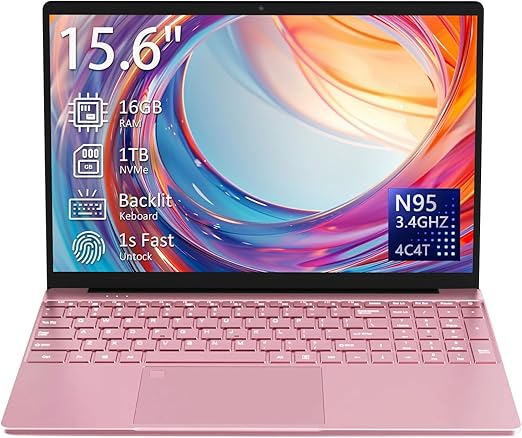
The Auusda T152A is a 15.6-inch pink laptop that combines practical specs with a stylish design at an accessible price point. Equipped with 16GB RAM, a 1TB NVMe SSD, and Windows 11 Pro, it’s designed for everyday computing needs like web browsing, document editing, and video calls. Its upgrade potential and user-friendly features make it a solid option for those seeking reliability without breaking the bank.
Key Features
- Intel N95 4-core processor (up to 3.4GHz) paired with 16GB DDR4 RAM (expandable to 32GB) and 1TB PCIe SSD (up to 8TB) for smooth multitasking.
- 15.6-inch FHD IPS display with narrow bezels and 180-degree hinge, supporting multiple external 4K monitors.
- Backlit keyboard, fingerprint reader for secure login, and a 300K-pixel webcam with dual stereo speakers.
- Compact at 3.7 lbs with an 8000mAh battery, plus ports like USB 3.0, HDMI, MicroSD, and Bluetooth 5.0.
Pros and Cons
- Pros: Generous storage and RAM options; vibrant display; lightweight and portable; strong warranty and support.
- Cons: Entry-level processor limits intensive tasks; plastic build feels less premium; battery life varies with usage.
Performance & User Experience
In daily use, the T152A handles office apps, streaming, and light photo editing efficiently thanks to its ample RAM and fast SSD. The backlit keyboard shines in dim environments, and the fingerprint unlock adds convenience. However, it may slow down with heavy multitasking or demanding software, making it best for moderate workloads. Connectivity is reliable, though Wi-Fi speeds depend on your network.
Who Is This Product For?
This laptop suits students, remote workers, or casual users needing a portable device for emails, online classes, and basic productivity. It’s ideal for those who prefer a fun pink aesthetic and value upgradability over raw power.
Final Verdict
The Auusda T152A offers great value for budget-conscious buyers with its balanced specs and thoughtful design. While not a powerhouse, it delivers dependable performance for everyday tasks, backed by a solid warranty. Consider it if your needs align with light to moderate use.
Read More:
- Best High BTU Patio Heaters 2025: Top Picks
- Corona Garden Spade Review: Why This Tool Outperforms All Others
- Best Camping Cookers 2025 – Top Picks & Reviews
- Best Energy Efficient Freezers 2025 — Save More Now
- Best Soaker Hoses 2025: Top Picks for Effortless Watering
Buying Guide: How to Choose the best notebook computers
Types of Notebook Computers
Notebook computers come in various types, each suited to different needs. Ultraportables prioritize thinness and lightness for frequent travelers, while performance-oriented models offer more power for demanding tasks like video editing. Convertible designs allow switching between laptop and tablet modes, ideal for touch-based work or note-taking.
Understanding these differences helps in selecting the best notebook computers for your lifestyle. For everyday use, a balanced all-rounder might suffice, but creative professionals often need larger screens and robust graphics capabilities found in workstation types.
Consider how you will primarily use the device to narrow down the category that aligns with your workflow and portability requirements.
Key Performance Factors
Performance hinges on components like the processor, RAM, and storage. A faster processor handles multitasking smoothly, while ample RAM— at least 8GB for basic needs—prevents slowdowns during web browsing or office work. Solid-state drives provide quicker boot times and file access compared to traditional hard drives.
Screen size and resolution affect usability; larger displays with higher resolutions suit media consumption, whereas battery life determines unplugged usage duration. When learning how to choose best notebook computers, match these specs to your software demands for optimal responsiveness.
Graphics capabilities vary, with integrated options fine for general tasks and dedicated cards better for graphics-intensive applications.
Build Quality and Durability
Build quality influences longevity, with metal chassis offering better resistance to dents than plastic ones. Sturdy hinges and spill-resistant keyboards withstand daily wear, making them essential for commuters or families.
Look for models tested for drop and vibration resistance to ensure they endure travel. What to look for in best notebook computers includes weight distribution for comfortable carrying and ports reinforced against frequent plugging.
Over time, durable construction reduces repair needs, providing peace of mind for long-term ownership.
Ease of Use and Setup
Modern notebook computers often feature intuitive operating systems with quick setup wizards that guide users through initial configuration. Familiar interfaces minimize the learning curve for those switching from desktops or phones.
Touchpads and keyboards designed for precision enhance daily interactions, while pre-installed software avoids compatibility hassles. For typical users, seamless Wi-Fi connectivity and gesture controls add to the user-friendly experience.
Prioritizing ease ensures you spend less time troubleshooting and more on productive tasks right out of the box.
Maintenance Requirements
Regular upkeep for notebook computers involves dusting vents to prevent overheating and updating software for security. Battery health benefits from avoiding full discharges, extending usable life over years.
Unlike desktops, these devices rarely need hardware swaps by users, but occasional screen cleaning keeps displays crisp. Low-maintenance designs with self-diagnostic tools simplify ownership.
Choosing models with minimal upkeep effort suits busy users who prefer reliability without constant intervention.
Noise and Comfort Considerations
Fan noise can disrupt quiet environments, so quieter cooling systems maintain a peaceful workspace during light tasks. Under heavy loads, some models stay relatively hushed thanks to efficient thermal designs.
Comfort comes from ergonomic keyboards with good travel and responsive trackpads, plus adjustable screens to reduce neck strain. Lightweight builds under 4 pounds ease prolonged carrying.
These factors enhance daily usability, especially for remote workers or students in shared spaces.
Safety Features
Safety starts with overheating protection that throttles performance or shuts down the device to prevent damage. Secure boot processes guard against malware during startup.
Biometric options like fingerprint readers add login security without passwords, while privacy screens deter shoulder surfing. Robust construction includes locked ports to avoid accidental disconnections.
These protections safeguard data and hardware, giving users confidence in varied settings.
Energy Efficiency
Energy-efficient notebook computers feature low-power components that extend battery life up to 12 hours or more for web and document work. Quick charging reaches 50% in under 30 minutes for minimal downtime.
Adaptive power management dims screens automatically and optimizes CPU usage, reducing electricity costs over time. This matters for eco-conscious buyers or those working away from outlets.
Efficiency balances performance with sustainability, supporting longer sessions without frequent recharges.
Warranty and Support
A solid warranty, typically one to three years, covers defects and accidental damage options provide extra assurance. Responsive customer support via chat or phone resolves issues promptly.
Reliability stems from quality components and rigorous testing, minimizing downtime. Access to driver updates and repair networks ensures ongoing performance.
In the best notebook computers buying guide, evaluating support policies helps predict ownership experience and quick resolutions.
FAQs
What key factors should I consider when choosing the best notebook computers?
When selecting the best notebook computers, focus on your primary use case. Processor speed and RAM determine multitasking ability, while storage capacity affects file handling. Display quality impacts viewing comfort, and battery life supports mobility. Ports and keyboard layout enhance usability. Weigh these against your budget and portability needs to find a balanced option that meets daily demands without excess features.
How does battery life affect the choice of best notebook computers?
Battery life is crucial for the best notebook computers, especially for users on the go. Aim for at least 8-10 hours of real-world usage to avoid frequent charging. Factors like screen brightness, processor efficiency, and background tasks influence duration. Check independent tests for accurate estimates, as manufacturer claims can vary. Prioritize this if mobility is key, balancing it with performance requirements.
What screen size works best for different notebook computer users?
Screen size in the best notebook computers depends on your lifestyle. A 13-14 inch display offers portability for travel and daily tasks. Larger 15-17 inch screens suit multitasking, content creation, or media viewing but reduce mobility. Consider resolution for sharpness and aspect ratio for productivity. Test in person to ensure comfort, as preferences vary between commuters and desk-bound users.
Are the best notebook computers upgradable?
Many best notebook computers allow limited upgrades like RAM or storage, but designs vary. Soldered components in slim models limit options, while others have accessible slots. Check specifications before purchase if longevity matters. Upgrading can extend usability, but it’s less common than in desktops. Plan for future needs upfront to avoid early replacement, focusing on base configurations that scale.
How do I ensure the best notebook computers fit my performance needs?
To match the best notebook computers to performance needs, identify tasks like browsing, editing, or coding. Entry-level specs handle basics, mid-range supports moderate workloads, and high-end tackles intensive applications. Benchmark scores provide objective comparisons. Balance power with heat and noise levels for comfortable use. This approach ensures reliable operation without overpaying for unused capabilities.
Conclusion
This article has covered essential aspects of notebook computers, from performance components and display options to battery efficiency and portability trade-offs. The best notebook computers emerge when aligned with individual requirements, whether for work, study, or entertainment. No universal top choice exists, as needs differ by user—some prioritize lightness, others power or screen real estate.
Refer back to the buying guide for detailed criteria and the comparison section for side-by-side insights. By evaluating these elements objectively, you can make a confident selection tailored to your routine. Take time to assess long-term usability, ensuring the notebook supports evolving demands without compromise.